
Are Your Passwords Really Safe? Security Flaws Found in Major Password Managers
We all strive for impeccable online security, especially when it comes to safeguarding our precious data. While password managers are often lauded as the ultimate solution, recent research suggests that relying solely on them might not be as secure as you think. Even if you’re not scribbling passwords on sticky notes, a new study casts doubt on the invulnerability of cloud-based password managers.
Many popular password management services boast about their “Zero Knowledge Encryption,” promising that your data remains entirely private, accessible only to you. The idea is that not even the service provider can peek into your password vault. However, a cutting-edge study conducted by security experts at ETH Zurich and Universita della Svizzera Italiana reveals that, in reality, this “Zero Knowledge Encryption” isn’t always a fortress (as reported by Ars Technica).
Through meticulous analysis and reverse-engineering of several prominent password managers, including LastPass, Bitwarden, and Dashlane, the research team uncovered what they describe as “a cornucopia of practical attacks.” Their findings are quite alarming: “Worryingly, the majority of the [security] attacks allow recovery of passwords—the very thing that the password managers are meant to protect.” It seems the digital locks we trust might have some significant cracks.
Let’s consider the scenario where an administrator of a shared password vault invites a new member or needs to reset a forgotten access code. During this process, multiple “keys” are generated and dispatched to the software client of the member involved. The client then bundles these keys together, encrypts them on the user’s device, and sends the encrypted package back to the password manager’s server.
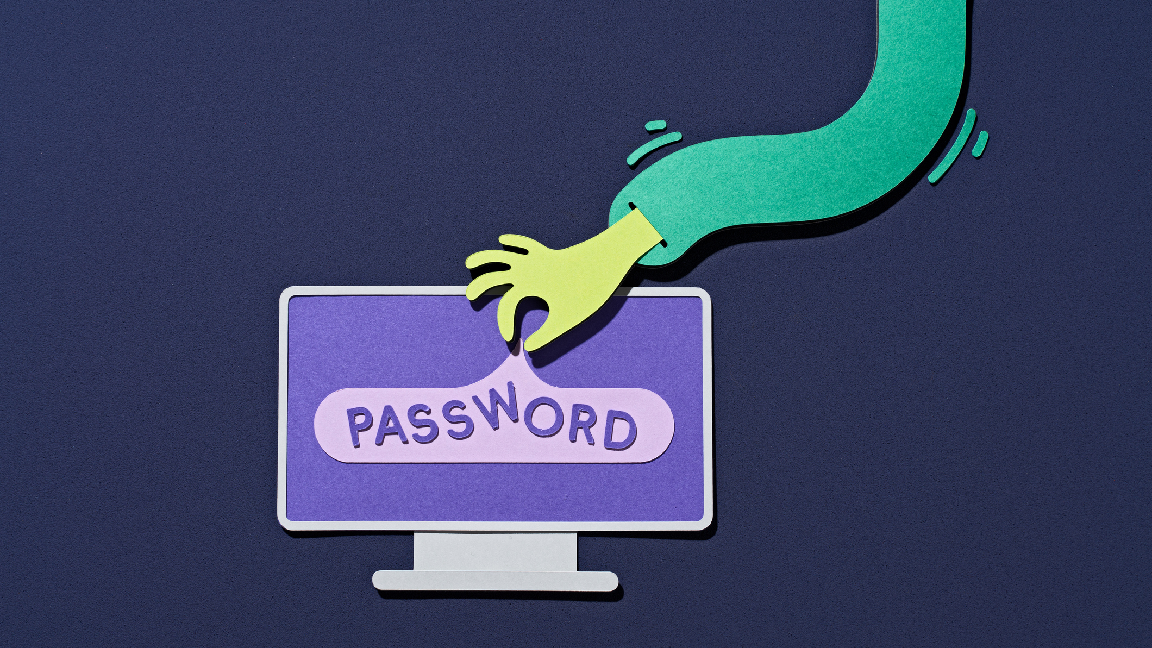
Here’s where the vulnerability lies: the researchers discovered that the resulting encrypted text isn’t always checked for integrity. This oversight creates an opportunity for malicious individuals to intercept the process, swap one of the legitimate keys with their own, and then utilize it to decrypt the ciphertext. This manipulation could grant them access to a shared vault’s key, potentially enabling them to initiate an account recovery on a targeted member’s account. Even more concerning, key pair manipulation can be exploited to decrypt and directly alter shared items stored within a password vault.
Returning to our example of inviting a new member, the most unsettling aspect of this key escrow attack is that an attacker could potentially gain unauthorized access to a member’s entire vault as soon as the invitation is accepted. Think about the implications: instant compromise.
The research paper delves into a range of other potential attacks, highlighting issues with password managers’ backward compatibility with older versions, and even exploring scenarios where the server itself is compromised and behaving maliciously.
In essence, the team concluded, “Despite [encrypted password vault] vendors’ attempts to achieve security in this setting, we [uncovered] several common design anti-patterns and cryptographic misconceptions that resulted in vulnerabilities.” This means that despite their best efforts, flaws exist that could compromise your security.
The bottom line? Whether it’s a rogue employee or a skilled hacker infiltrating the servers of your chosen password manager, the potential for unauthorized access to your passwords exists. While outlandish solutions like password pills aren’t the answer, neither is relying on our imperfect memories.
Despite these findings, password managers remain the most practical way to manage numerous, complex passwords. However, it’s essential to bolster your security. Ensure that your recovery account for these services uses a unique password, one that isn’t stored within the password manager itself. Furthermore, implement two-factor authentication (2FA) with a separate service to generate your security codes, adding an extra layer of protection.