
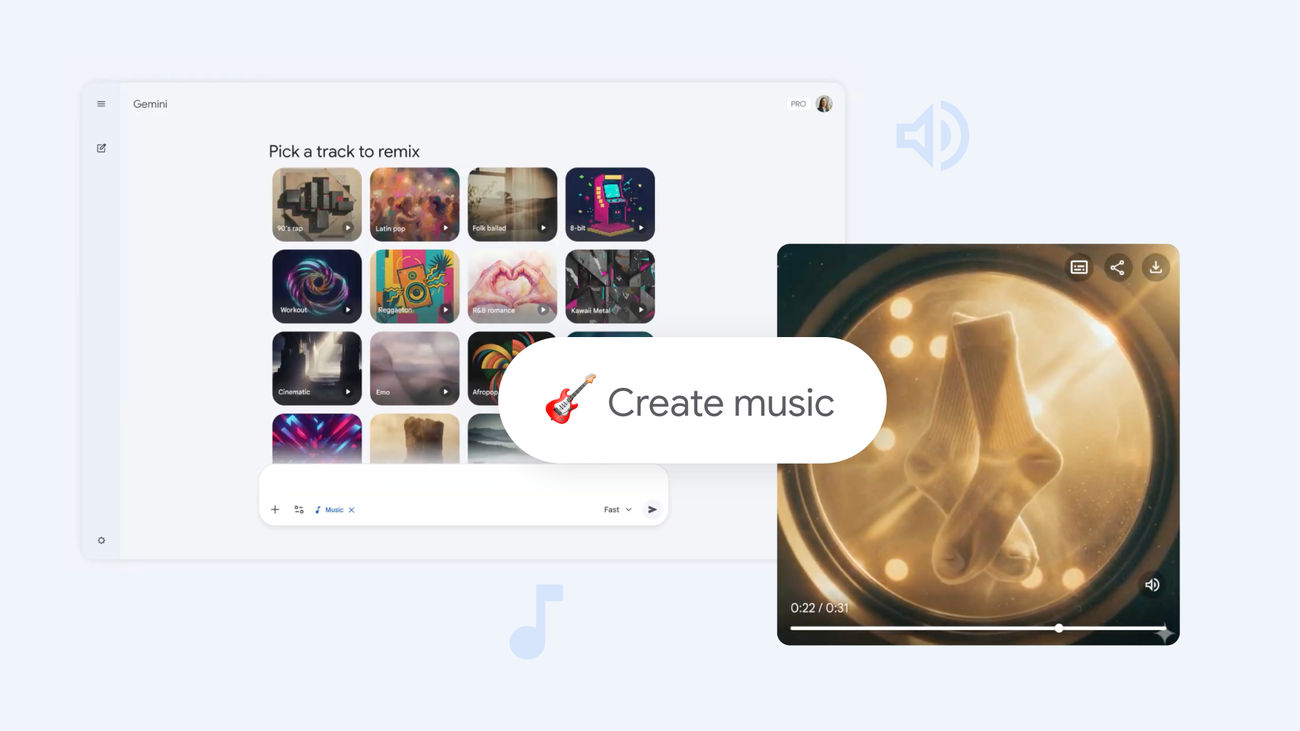
Tips for using Google DeepMind’s Lyria 3
1. Begin with text
Unleash your creativity with Lyria 3 by starting with a simple text prompt. Describe the kind of track you’re envisioning – lyrics or instrumentals are both fair game! For example, you could type: “Craft a song that captures the essence of my mom’s signature dish: rice, plantains, and beans. Make it an Afrobeats track with a West African vocalist.” Or, transform any idea, topic, or private joke into a unique musical creation. Imagine telling your roommate to do the dishes with a “90s skate punk rock track – high-energy with lightning-fast drums.”
2. Upload an image or video
Looking for a more visual approach? Lyria empowers you to use images or videos as your muse. Upload your favorite vacation pictures, snapshots of your pet, or even your own artistic creations. Lyria analyzes the visuals – taking cues from the subjects, their attire, the background, and more – to generate music that perfectly complements the scene.
3. Define the genre and era
Stuck on where to begin? Don’t worry – start with the basics! Lyria boasts an impressive range of genres and eras, from ’90s hip-hop to 2000s pop. Get adventurous and blend different styles within a single composition. How about a catchy K-pop song with a touch of Motown? Or perhaps a funk track elevated by classical violins? The possibilities are endless.
4. Add details like instruments, song dynamics and vocals
If you choose a genre and era like “1950s jazz,” saxophones and trumpets will likely take center stage. However, you can always inject your personal touch by incorporating additional instruments, such as an ’80s synth, to add depth to your sound. If you leave the instruments unspecified, Lyria will intelligently select instruments that align with the chosen genre. Furthermore, you have control over the song’s structure. Picture a gentle piano melody building into an explosive chorus, or a purely instrumental interlude. Lyria can also generate vocals. Specify whether you want a male or female vocalist, and indicate their vocal range (baritone or soprano). You can even create a full choir! Experiment with descriptive terms like “rich,” “gravelly,” “soulful,” or “breathy” to shape the vocal style. Explore layering different vocal styles, like vocals gradually becoming quieter or splitting into harmonies.
5. Write your own lyrics — or ask Lyria to handle it
Want to showcase your songwriting skills? Use the prefix “Lyrics:” to include your own lyrics (remember to keep them concise, as tracks are limited to 30 seconds!). To create background vocals that echo the main melody, incorporate parentheses like this: “Lyrics: Let’s go (go).” Alternatively, allow Lyria 3 to craft lyrics for you by providing a clear theme in your prompt. Request “a love song,” “a song about success,” or even a personalized “new happy birthday song” for a friend.
6. Share your tracks
Sharing your Lyria 3 creations is incredibly simple. Just download your track as an MP3 or MP4 and post it on social media or send it via text. Guaranteed to inject some excitement into any conversation – give it a try today!